

Synthetic vs. Wooden Flooring for Badminton Court Construction: A Complete Guide
Tennis Court Construction Cost in India: What Most People Get Wrong Before Building

Planning a tennis court?
Most people start by asking: “What does it cost to build a tennis court in India?”
But the better question is:
👉 What actually drives the cost and how do you avoid expensive mistakes?
Because in reality, tennis court construction isn’t about a single price. It’s about design decisions, base quality, surface choice, and long-term performance.
If you get these right, your court lasts for years.
If you don’t, you’ll spend more fixing it than building it.
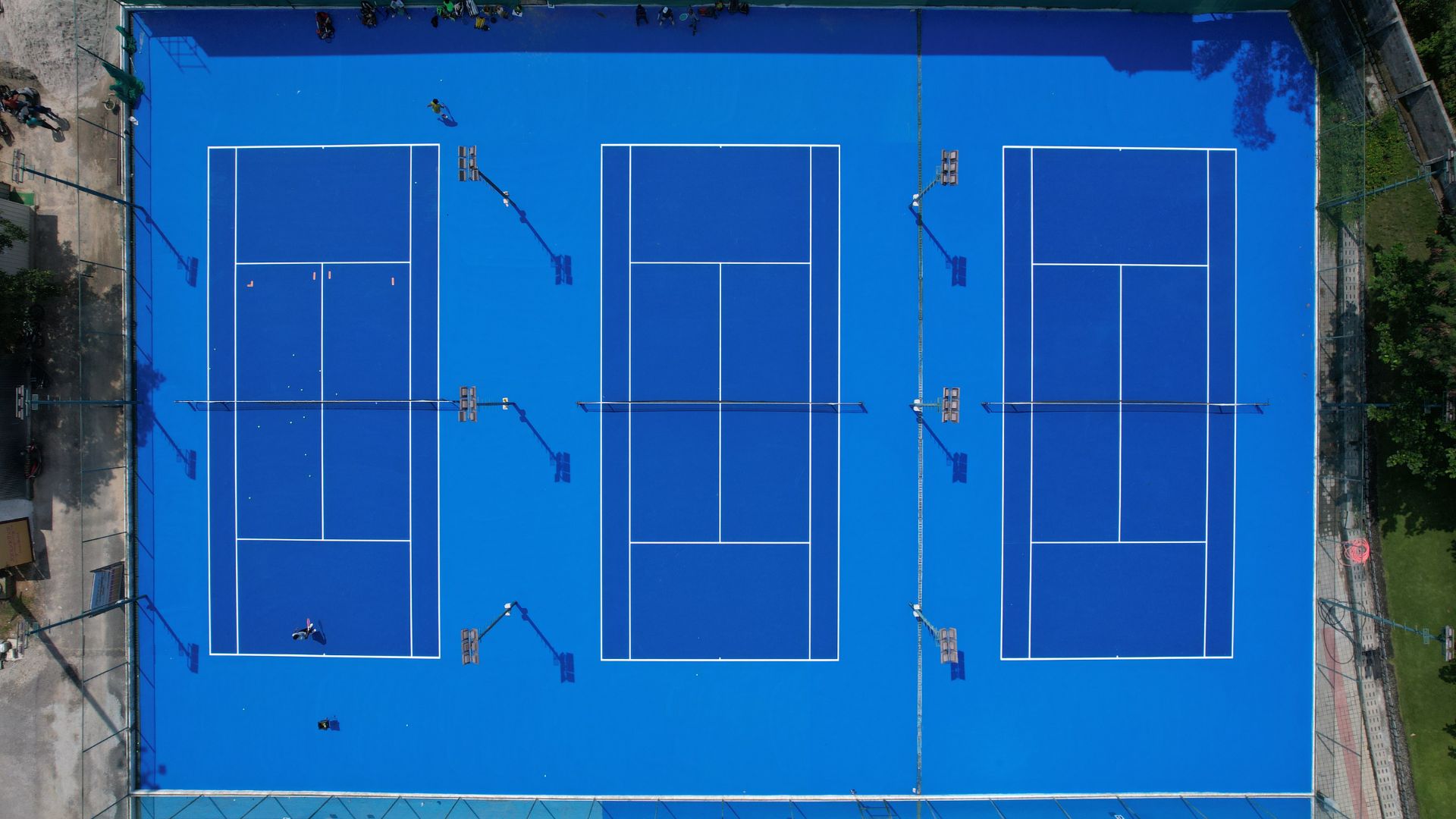
What Determines Tennis Court Construction Cost in India?
The cost of tennis court construction in India depends on:
Surface type (acrylic, clay, turf)
Base construction quality (concrete/asphalt layers)
Site conditions (soil, leveling, drainage)
Indoor vs outdoor setup
Lighting, fencing, and accessories
Number of courts and project scale
👉 There is no fixed cost, only a combination of design and engineering choices.
Why Tennis Courts Are Booming Across India
Tennis courts are rapidly becoming a standard feature in modern developments.
What’s driving this growth:
Premium positioning for real estate projects
Increased demand for sports amenities
Rise of academies and coaching programs
Revenue opportunities through memberships and rentals
How a Tennis Court Is Built (Simplified Process)
1. Site Planning
Orientation
Drainage and accessibility
2. Ground Preparation
Excavation and compaction
Base leveling
3. Base Construction
Concrete or asphalt layers
Structural stability + water flow design
4. Surface Installation
Acrylic (most common)
Clay or synthetic turf (specific use cases)
5. Finishing
Line marking
Net systems
Fencing
6. Lighting & Drainage
Essential for usability and durability
The Biggest Cost Drivers (That Most People Overlook)
1. Base Construction Quality
This is where most long-term problems start.
A weak base = cracks, uneven bounce, water issues.
2. Drainage Design
Especially in Indian monsoons, poor drainage leads to:
Water logging
Surface damage
Frequent repairs
3. Surface Selection
Each surface impacts:
Playability
Maintenance effort
Lifecycle cost
4. Site Conditions
Rocky soil, slopes, or restricted access can increase complexity.
5. Indoor vs Outdoor Setup
Indoor courts require:
Structural enclosure
Ventilation
Lighting systems
Common Mistakes That Increase Construction Cost
❌ Choosing based only on lowest quotation
❌ Ignoring base and drainage quality
❌ Overdesigning without clear usage purpose
❌ Not planning maintenance requirements
❌ Making changes mid-construction
👉 These mistakes often double long-term costs.
Before You Build: A Simple Decision Checklist
✔ What is the primary use, recreational or professional?
✔ What surface suits your climate and usage?
✔ Is the site technically suitable?
✔ Have drainage and maintenance been planned?
Why Smart Planning Matters More Than Initial Cost
A tennis court is not just a surface, it’s an engineered sports system.
Well-built courts:
Last longer
Require less maintenance
Deliver consistent performance
Poorly built courts:
Crack early
Need constant repairs
Cost more over time
Build Performance-Driven Tennis Courts with Michezo Sports Infra
At Michezo Sports Infra, we design and construct tennis courts that are built for Indian conditions focusing on durability, drainage, and long-term usability.
👉 Planning a tennis court project?
Speak with Michezo Sports Infra for expert guidance on design, execution, and lifecycle performance.
Disclaimer
This article is for general informational purposes only. Actual construction scope, materials, timelines, and costs may vary depending on site conditions, design requirements, and regional factors. Final specifications should be determined after technical evaluation.